This is the second live-blog of my spring 2026 DERs class.
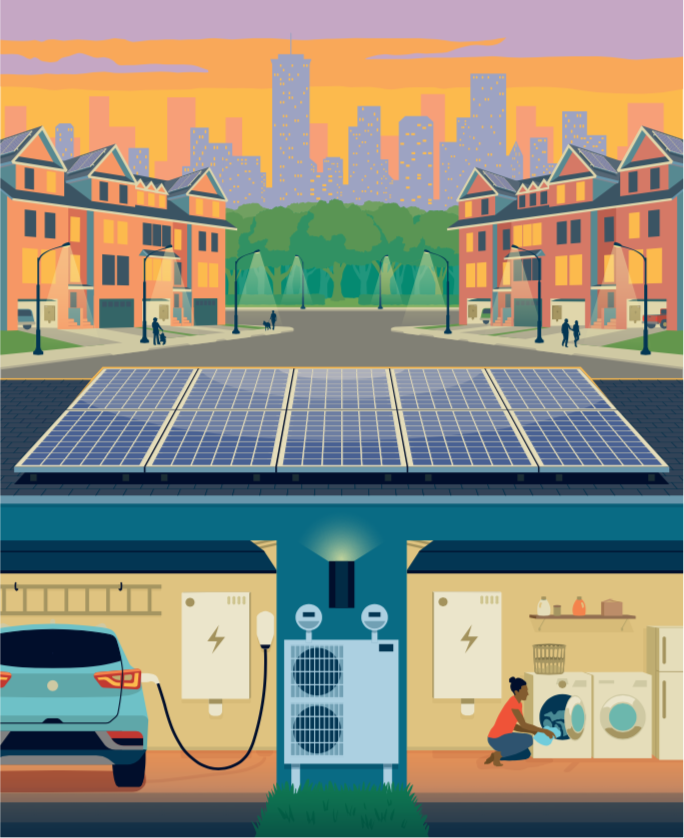
Distributed Energy Resources (DERs) are1 controllable electrical devices that plug in at the edge of the power grid, typically through buildings. Examples include batteries, electric vehicles, solar photovoltaics, space heating and cooling equipment, water heaters, thermal storage, and a variety of loads whose operation can be shifted through time, from dishwashers to aluminum smelters.
DERs are different from, and complementary to, the central infrastructure that has dominated American electricity systems for the last century. A great example of what DERs aren’t is the newest coal power plant in the US: the Sandy Creek Energy Station near Waco, Texas. The plant took five years to build, came online in 2013, cost about $1.7 billion in 2026 dollars, and had nearly 1 GW of electricity generation capacity — enough to power about half a million homes — until it failed catastrophically in late 2025. It will stay offline until 2027 at the earliest. At its peak, the Sandy Creek coal power plant emitted millions of tonnes of carbon dioxide per year, was among the worst air polluters in Texas, and could only change its power output by about 5% per hour. That sluggishness prevented the plant from providing most of the fast reliability services that power grids need to operate stably 24/7/365.
Where the Sandy Creek coal power plant was slow and dirty, DERs tend to be agile and clean. A battery or heat pump (an efficient electric heating/cooling machine) might install in hours, change its operating point from zero to full capacity in seconds, and emit no greenhouse gases or air pollution if run on clean electricity. DERs can be aggregated2 and coordinated to provide a portfolio of reliability services to power grids. Unlike big central power plants, which connect to the high-voltage transmission system, DERs live at the edge of the power grid near people’s homes, businesses, and vehicles. This lets DERs provide reliability services that central power plants can’t, such as alleviating strain on low-voltage wiring and circuit breaker panels within buildings, or on power lines and transformers in medium-voltage distribution grids.
That’s a little flavor for what DERs are. Next time: Why you might want to learn about DERs.
- Wikipedia editors disagree. They redirect DER searches to Distributed generation, a page that mainly talks about energy supply — backup generators, solar panels, etc. — and largely ignores the other two categories of DER: energy storage and flexible demand. I have not had success trying to change this, but maybe someday.
- A group of DERs that coordinate to provide grid services is called a Virtual Power Plant (VPP) or a Distributed Power Plant (DPP). The idea is that a VPP done well has all the capabilities that grid operators expect from a conventional power plant, and maybe more.